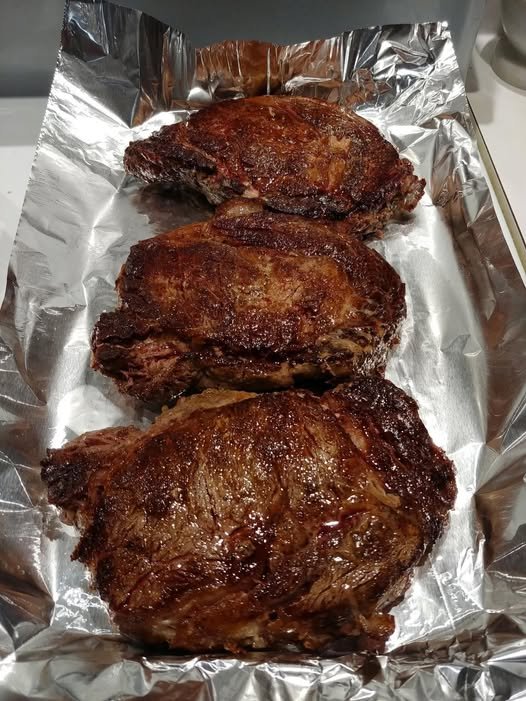
Ingredients
-
1 ribeye steak (1–1.5 inches thick, about 12–16 ounces)
-
1–2 tablespoons olive oil or vegetable oil
-
Salt, to taste
-
Freshly ground black pepper, to taste
-
Optional: garlic cloves, rosemary, or thyme for added aroma
-
Optional: butter for basting
Step 1: Choose and Prepare Your Ribeye
Select a ribeye with good marbling—thin streaks of fat running through the meat—which ensures flavor and juiciness. Let the steak sit at room temperature for 30–60 minutes before cooking. This helps it cook evenly and develop a better sear.
Pat the steak dry with paper towels. Moisture on the surface can prevent a proper crust from forming, so drying it is essential.
Step 2: Season the Steak
Generously season both sides with salt and freshly ground black pepper. For extra flavor, you can also rub with garlic powder or your favorite steak seasoning blend. Don’t be shy with the seasoning—the crust is where much of the flavor comes from.
Step 3: Preheat the Pan or Grill
For pan-searing, use a heavy skillet or cast-iron pan. Heat it over high heat until it’s smoking hot. For grilling, preheat your grill to high. A hot cooking surface is crucial to achieve the classic seared crust that locks in juices.
Step 4: Cook the Ribeye
-
Pan-Searing Method:
Add oil to the hot skillet and place the ribeye in the pan. Cook for 4–5 minutes on the first side without moving it. Flip the steak and cook for another 3–5 minutes for medium-rare (adjust time for thickness and desired doneness). -
Grilling Method:
Place the steak on the preheated grill. Cook for 4–5 minutes per side for medium-rare, adjusting for thickness and grill temperature. Rotate 90 degrees halfway through each side for a crosshatch pattern if desired. -
Optional: Add a couple of crushed garlic cloves, rosemary, or thyme to the pan and baste with butter during the last 2 minutes of cooking for enhanced flavor.
Step 5: Check Doneness
Use a meat thermometer for best results:
-
Rare: 120–125°F (49–52°C)
-
Medium-Rare: 130–135°F (54–57°C)
-
Medium: 140–145°F (60–63°C)
-
Medium-Well: 150–155°F (66–68°C)
-
Well-Done: 160°F+ (71°C+)
Avoid cutting into the steak to check doneness too early, as this releases juices.
Step 6: Rest the Steak
After cooking, let the ribeye rest for 5–10 minutes under tented foil. Resting allows the juices to redistribute, ensuring a moist, tender steak when sliced.
Step 7: Serve
Slice the ribeye against the grain to maximize tenderness. Serve as is, or top with a pat of herb butter, sautéed mushrooms, caramelized onions, or a drizzle of balsamic reduction. Pair with sides like roasted potatoes, grilled vegetables, or a fresh salad for a complete meal.
Tips for the Perfect Ribeye
-
Room Temperature: Ensures even cooking.
-
High Heat Sear: Creates a caramelized, flavorful crust.
-
Resting: Prevents juices from running out when slicing.
-
Butter Basting: Adds richness and flavor during cooking.
-
Use a Thermometer: Guarantees your steak is cooked exactly how you like it.
Variations
-
Garlic Herb Ribeye: Rub with garlic and fresh herbs before searing.
-
Peppercorn Ribeye: Coat with crushed black pepper and finish with a creamy peppercorn sauce.
-
Grilled Ribeye with Chimichurri: Top with a fresh chimichurri sauce for a zesty twist.
-
Smoky Ribeye: Cook over charcoal for a smoky flavor.
-
Reverse Sear Ribeye: Slow-cook in the oven first, then sear for an even crust and perfect internal temperature.
Storage and Leftovers
Cooked ribeye can be stored in an airtight container in the refrigerator for up to 3 days. Reheat gently in a skillet over low heat or in the oven to preserve moisture and tenderness. Slice thinly for sandwiches or salads.
Why Ribeye Works
Ribeye is prized because its marbling ensures juiciness and rich flavor. The fat melts during cooking, creating a buttery texture that pairs perfectly with simple seasonings, herbs, or sauces. Its tenderness and beefy taste make it one of the most flavorful steaks available.
A Ribeye Steak is the ultimate indulgence for steak lovers. With a perfectly seared crust, juicy interior, and rich flavor, it’s a versatile centerpiece for any meal. Whether pan-seared, grilled, or broiled, mastering ribeye guarantees a restaurant-quality steak at home every time.